In today’s fast-paced world, quality sleep has become a precious commodity. Many of us struggle with sleepless nights, stress-induced insomnia, or simply the inability to relax and drift off to dreamland. Enter yoga—a time-honored practice that offers a holistic approach to enhancing sleep quality. With its combination of physical postures, breathing techniques, and meditation, yoga can transform your sleep experience, bringing you the restful nights you crave.
Understanding the Connection Between Yoga and Sleep
Yoga’s impact on sleep is multifaceted. At its core, yoga promotes relaxation by activating the parasympathetic nervous system, which counters the fight-or-flight response. This shift from a state of alertness to one of calmness is essential for falling and staying asleep. Furthermore, yoga encourages mindfulness, helping individuals to let go of daily stresses and anxieties that can hinder sleep. By focusing on the present moment, practitioners can cultivate a sense of peace conducive to restful sleep.
The Science Behind Yoga and Sleep
Scientific research supports the beneficial connection between yoga and improved sleep quality. Studies have shown that regular yoga practice can increase the production of melatonin, a hormone that regulates sleep-wake cycles. Moreover, yoga has been found to reduce levels of cortisol, the stress hormone, which is often elevated in individuals with sleep disorders. By balancing these hormones, yoga creates an internal environment that promotes restorative sleep.
Yoga Postures for Better Sleep
Child’s Pose (Balasana)
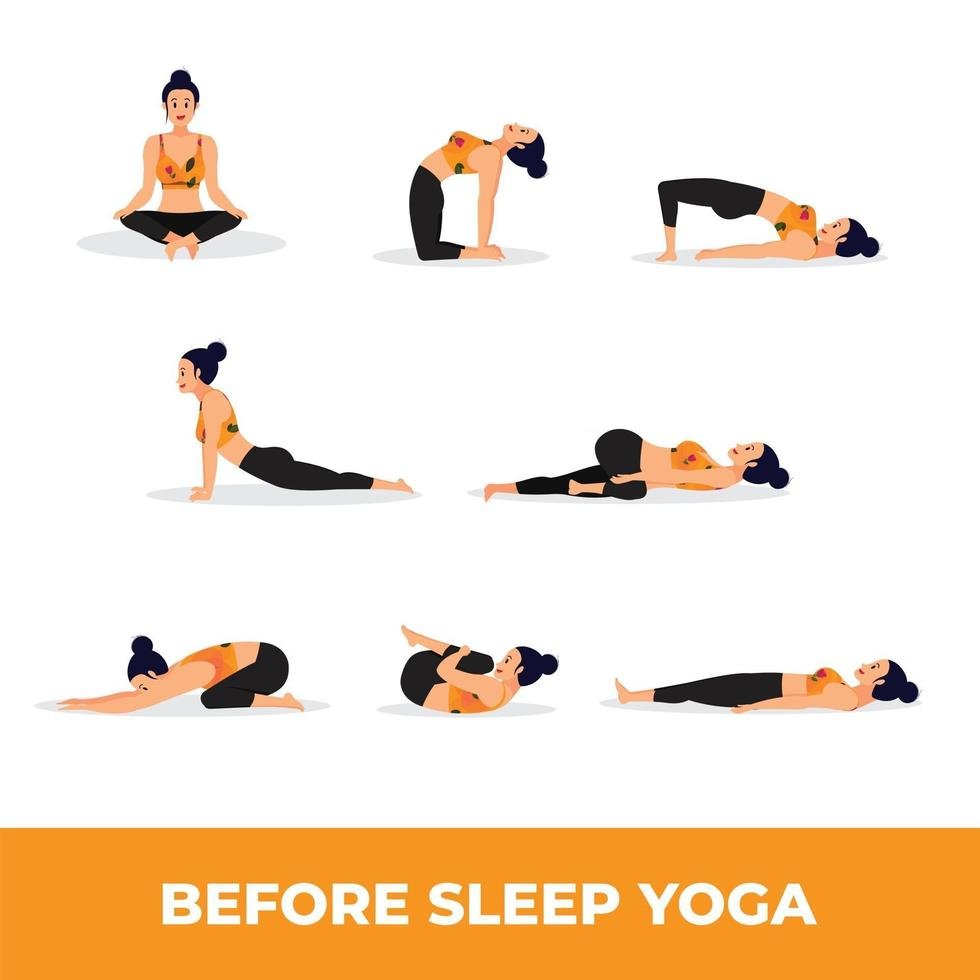
Child’s Pose is a gentle forward bend that calms the mind and relieves tension in the body. To practice, kneel on the floor, sit back on your heels, and stretch your arms forward on the ground. Rest your forehead on the mat and breathe deeply, allowing your body to relax with each exhale.
Legs-Up-the-Wall Pose (Viparita Karani)
This restorative pose is excellent for reducing anxiety and promoting circulation. Sit with one side against a wall, then swing your legs up as you lower your back to the floor. Rest your arms by your sides, close your eyes, and breathe slowly. This inversion helps to calm the nervous system and prepare the body for sleep.
Reclining Bound Angle Pose (Supta Baddha Konasana)
Reclining Bound Angle Pose opens the hips and relaxes the body, making it ideal for bedtime. Lie on your back, bring the soles of your feet together, and let your knees fall open. Use pillows or blankets to support your knees and lower back if needed. Focus on your breath, and let go of tension in your hips and thighs.
Supine Spinal Twist (Supta Matsyendrasana)
This gentle twist helps to release tension in the spine and aids in digestion. Lie on your back, draw your knees to your chest, and then lower them to one side. Keep your shoulders grounded and turn your head in the opposite direction. Hold for several breaths before switching sides.
Breathing Techniques for Relaxation
Alternate Nostril Breathing (Nadi Shodhana)
This breathing technique balances the left and right hemispheres of the brain, promoting mental clarity and relaxation. Sit comfortably and use your right thumb to close your right nostril. Inhale deeply through your left nostril, then close it with your ring finger. Open your right nostril and exhale slowly. Continue this alternate breathing pattern for several minutes.
4-7-8 Breathing Technique
This technique, often used to reduce stress and induce sleep, involves breathing deeply to a specific count. Inhale through your nose for a count of four, hold your breath for a count of seven, and exhale slowly through your mouth for a count of eight. Repeat this cycle three to four times to calm your mind and body.
Incorporating Meditation for Deeper Sleep
Meditation is a powerful tool for enhancing sleep quality. By training the mind to focus and relax, meditation helps to break the cycle of racing thoughts and worry that can disrupt sleep. Consider setting aside a few minutes each evening for a guided meditation or a simple mindfulness practice. Focus on your breath, visualize a peaceful scene, or silently repeat a calming mantra. Over time, meditation can train your mind to enter a state of relaxation more readily, making it easier to drift off to sleep.
Creating a Yoga Sleep Routine
To maximize the sleep-enhancing benefits of yoga, consider establishing a consistent bedtime routine. Set aside 15 to 30 minutes each evening for a gentle yoga practice, incorporating the postures and breathing techniques mentioned above. Create a calming environment by dimming the lights, playing soft music, and using calming scents like lavender. By making yoga a nightly habit, you signal to your body that it’s time to unwind and prepare for sleep.
Tips for Success
As you embark on your journey to better sleep through yoga, keep these tips in mind:
- Consistency is key. Aim to practice yoga and meditation at the same time each night to establish a routine.
- Listen to your body. Choose poses and practices that feel comfortable and relaxing for you.
- Be patient. The benefits of yoga for sleep may take time to manifest, so give yourself grace and stick with it.
- Avoid stimulating postures or intense workouts close to bedtime, as they can have the opposite effect.
Conclusion
Transforming your sleep with yoga is a journey of self-care and mindfulness. By integrating gentle yoga postures, calming breathwork, and meditation into your nightly routine, you can create a peaceful sanctuary for rest and rejuvenation. Embrace yoga as a holistic approach to better sleep, and allow yourself to experience the profound benefits of a restful night. Sweet dreams await as you cultivate a practice that nourishes both body and mind.